
Back in my Wizards of the Coast days, there was a weird and ultimately terrible initiative called Gleemax. It was a very mid-2000s sort of thing. WotC wanted to create a Myspace/Facebook-like platform for gamers, filled with various casually addictive (some might say predatory) games, accompanied by a host of microtransactions and skins. You know, the kind of thing that C-Suite folks believe gamers desire, while providing profits that make their loins thrillingly moist. It had all sorts of stages, most of which never saw the light of day and were plagued by ill-fitting and buggy out-of-the-box backends and interfaces that frustrated instead of delighted.

At its inception, the D&D staff were encouraged to write posts sharing their thoughts on games and game design. We continued this practice for a short time until we discovered that our opinions could be disciplined, from notes in our permanent record up to termination, if they didn’t align with the site and the company’s principles. The Rub: WotC could provide no clear guidance on what those principles entailed, aside from “use your best judgment.” Whatever the fuck that means.
But before that weird hammer dropped, I wrote a blog post about my thoughts on TTRPG design. Within it, I made a self-evident statement: When designing a TTRRPG engine, you are not building a physics engine but rather a narrative framework predicated on play. I was not prepared for the blowback.
Spitting vitriol soon echoed loudly in that chasm that is our internet discourse. How dare I even suggest such a thing? Fire him now! Ye gods! What abdominal blaspheme is this?
I’m just going to assume you have either rage quit now because you agree that somehow in a storytelling game about shit that never existed should be creating coherent physics, even as we strive to figure out our own, or you get what I’m laying down.
Those in the latter camp, let’s continue.
The first and most important job of any TTRPG ruleset is to provide tools for its players to set and narrate the game’s story. From the dice or other probability tools used to adjudicate results and events, to the various terms and definitions used in its rules, if they are not fulfilling that purpose, they probably don’t deserve to be in your game.
A good, yet somewhat extreme, example of this is Shadowdark, the current darling of the OSR and those frustrated by the current versions and dramas of D&D. This game strips down the 5e rules, adds a layer of systemic uncertainty, and creates a frantic, funhouse-like hazy with nostalgia. I dig it. However, it does rely on its user being conversant in the story it is trying—or, instead, not trying—to tell. It doesn’t hold your hand or even explain itself well. Most of the time, if you’re looking for a hand, it provides only a method for you to get it chopped off. I mean, it’s no Mork Borg, but it’s awfully close.
There are two sides (read: alignments) in the game: the players and everything else. If you are not killing foul beasts, you are exploring, ensuring your light source is beaming or resting, typically while fighting off things that don’t want you to. Even the downtime in the basic rules assumes you are out looking for lesser trouble or researching the next delve. Any idea of willful character progression is gutted, as the game is more interested in the emergent stories that arise from its carnage. And this is ultimately the game’s greatest strength. I applaud architect and author Kelsey Dionne for its design. I enjoy its minimalist approach and admire her “get in and then get out” design aesthetic. The game is a blast to play with a skilled and conscientious GM and a cadre of gaming buddies. And I would play it no other way.
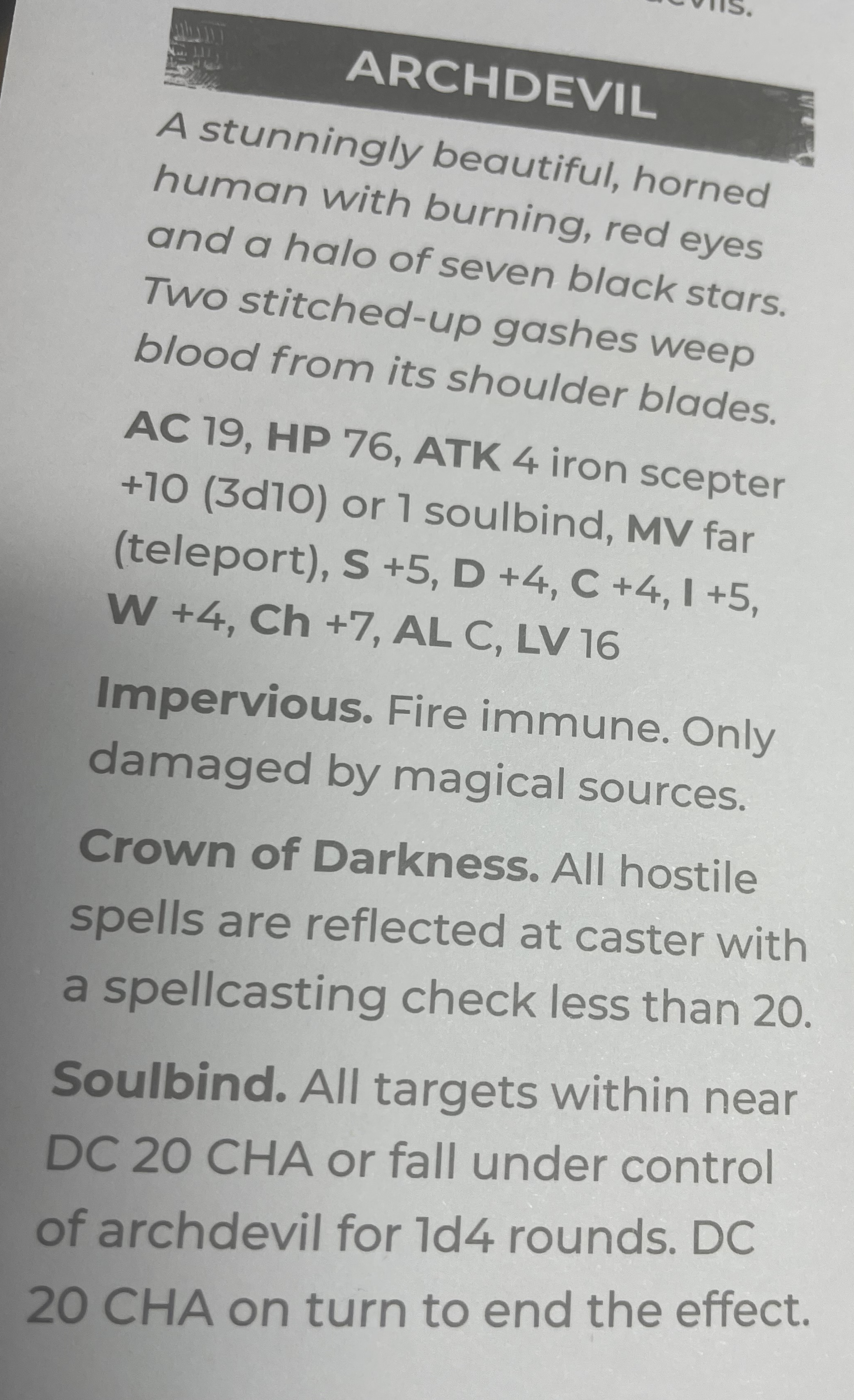
For instance, the monster stat blocks are a sight to behold. Since the 80s, you have never seen a block of such brevity. It all contributes to the game’s narrative goal. It is a thing of spartan beauty.
When confronted with an example of elegant simplicity, a game designer can’t help but feel a little self-conscious about their own approach, especially when it seems like sprawl in comparison. Throughout the development of Delve RPG, I’ve had a similar design aesthetic in mind. I appreciate clear and precise rules in standard formats that enable me to understand the procedures and boundaries of play. However, Delve RPG is not Shadowdark, despite some similarities, especially in its love for an old-school feel.

But even old school is not a monolith. I love, love, love a good dungeon crawl. They are thrilling, dangerous, and weird. At the same time, I strive to create a game that feels right at home in a dungeon yet possesses the tools — sometimes hidden in plain sight — that enable excellent narration, diverse challenges, and world-building. I’m all for building monsters that are a thrill to fight, but I’m also into creating critters you can interact with and deal with sans murder. Don’t get me wrong, the heavy lifting in any monster design is all about combat, but it’s essential in a world that features creatures ranging from snarling, senseless beasts to superintelligent liches to provide mechanics that differentiate between the two, both qualitatively and quantitatively.
Take, for instance, the D&D Intelligence score. It has always worked like an abbreviated IQ score, but it has all the problems associated with such types of scoring. Now, all the ability scores had this similar problem, especially in the game’s early days, where there was this range of scores on a (usually highly modified) curve that ultimately measured nothing tangible until you reached higher extremes. Most of the critical numbers on your sheet were merely descriptive window dressing for the first half of the game’s life. It wasn’t until 3e that the rules game systemically offered many of those scores employment by deploying the superstructure of modifiers. This gave qualitative life to many of those scores by representing the native ability within several actions and activities. But to me, Intelligence always lived in a weird sort of ghetto. The numbers were never descriptive enough; they only played into the idea that you could have more of certain things if you were intelligent (languages, skills, wizard spells). This often led to strange results during monster creation, as you couldn’t give oomph to dumb but skillful critters and cluttering up the skill lists of super-smart but focused villains.
This is because there are many categories of intelligence. When we say something is smart, we mean different things based on the type of creature or object we are talking about. A very smart dog would be entirely out of its element in High School. Saying your friend Ron is a smart guy doesn’t mean he understands the mathematics of quantum physics or even has the gumption to come out on top in a battle of wits effortlessly.
Constructs, insects, and soulless undead (such as skeletons and zombies) aren’t necessarily dumb; they are motivated by their programming or instincts. Even then, in a world of fantasy, such creatures can be brighter than average, yet not exceptional.
Most games struggle to replicate super-intelligent creatures. Some individual manifestations offer the ability to replicate their intelligence, but they deserve a bit more. Over the course of development, I created a group of intellect elements. Like all elements, they add descriptive text and sometimes specific rules and are used as the building blocks for creating actors in the game. Every actor except for mechanisms and events possesses one of the following intellect elements:
Here are the basics:
Mastermind
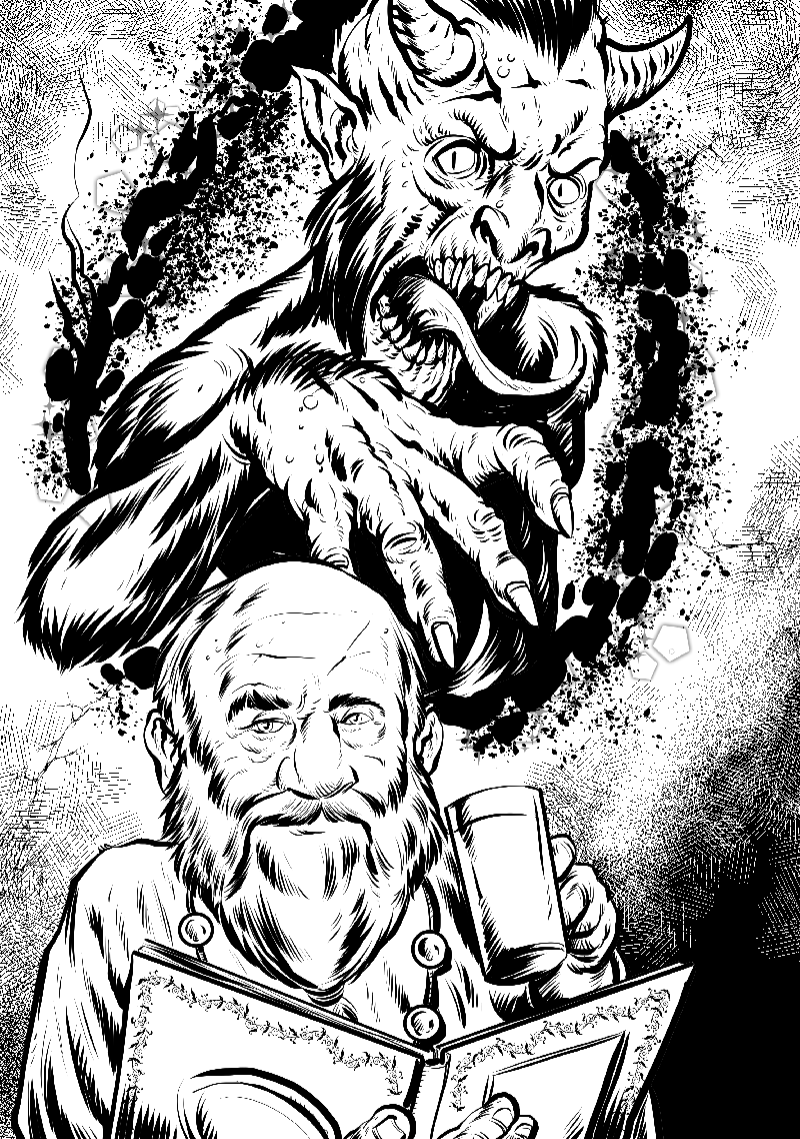
These actors are not only |Sapient|, but they are also a step beyond such intellect. Not only are they capable of thought, abstract symbolism, and reason, but they also possess an uncanny ability to determine the outcomes of their actions, and many have |Psychic| talents. All |Mastermind| creatures possess a Genius attribute. This pool attribute has a number of points equal to the |Mastermind| creature’s Knowledge score. It can be spent on two base talents and other Genius talents. The base talents and three others can be found at the Delve RPG Patron as a preview for Delver member and above.
|Mastermind| actors are typically either resistant or immune to |Mental| effects, but only against those created by non-|Genius| actors.
Instinctual
These actors follow their instincts unemotionally. They pursue the goals of their instincts, and nothing more. What little communication they engage in is very basic, consisting of rudimentary signs and sometimes the release of pheromones. These actors can’t be reasoned with, communicated with, and tricking them can be difficult. Instinctual actors always have a Charm and Knowledge score of zero, gain two boosts to Awareness, and are either resistant or immune to |Mental| effects.
Programmed
These actors have a semblance of intelligence provided by magic or mechanism. The actor determines the potency of this programming’s Knowledge score, as they gain statements of programming equal to that score. While such statements are at the discretion of the Delve Master or provided in the adventure where these actors appear, they are generally limited to a single, non-run-on sentence. A programming statement might look like this:
“Slay any who are not wearing the robe of the Temple of the Fire Eye who enter the chamber.”
These actors usually understand one language. Their creator and a number of additional |Sapient| or |Genius| actors, equal to the |Programmed| actor’s knowledge designated by the creator, can provide and override their programming; those additional creatures are designated as controllers of the |Programmed| actors. This activity usually takes at least 10 minutes. The creator can redesignate controllers with an activity that takes the same amount of time.
|Programmed| actors are typically immune to |Mental| effects.
Sapient
These actors lack strong instincts, but in their place, they possess a full suite of senses, emotions, reason, and logic. |Sapient| actors excel in symbolic communication and can learn to read, write, or master sign languages. |Sapient| actors can learn to cast spells and are often part of complex societies. |Sapient| creatures can converse with each other if they share a form of communication and can attempt to do so even if they don’t.
Sentient
These actors rely on instincts and emotions guided by a full suite of senses to interact with the world. |Sentient| actors may possess some forms of communication, but they cannot engage in abstract and symbolic communication; however, they can sometimes learn commands given in a specific language. They can’t learn to cast spells.


Leave a Reply