

Have you ever read a book or watched a documentary and came away from it thinking, “holy shit, I thought I knew how the world worked, but now I’m not so sure.” It can be very off-putting, sure, but I love that feeling. I love nuance, disagreement, and possibility. I even love watching the most hairbrained or supercilious point of view (I’m looking at you Graham Hancock) and imagining it might be true, even for a fleeting few moments, before dismissing it as poppycock. Lost continents, cryptids, strange creatures living beneath mountains, ghost stories, vampires, werewolves, the walking dead, alien abductions, angels, spirits, creation myths, strange pantheons, gates to Hell, hyperspace, ESP, astral projection, ectoplasm—I adore them all. At the same time, my rational mind screams, “Horse shit!”
Why do I love these things? Well, they are, the source and nuance of fantasy. Many of these things are the first attempts to make sense of complex phenomena in our world and the universe.
Before the germ theory of medicine, humanity thought sickness came from divine retribution, curses, and miasmas. In fantasy, all those things live together. In some way, they are all equally valid.

Before the discovery of the plate tectonics mechanisms, Aristotelian views of elemental interactions and the concept of lost continents prevailed. In fantasy, they can all live together in weird harmony.
Now, I know there will be at least one of you who reads what I just wrote and thinks about sending me a scathing note. After all, that’s a long list of what I’ve just decried as horse shit that some people still believe is real (I’m looking at you RFK Jr.). And while that has been a catalyst for irritating conversations in my life, I love that too. And it’s that very real conflict of what we want to be true and what is true that I like to replicate in fantasy stories and even mechanics for the games used to tell those stories. Ambiguity and nuance can create fascinating stories.
In the Delve RPG, I wanted to lean into that, especially when it came to the darker corners of magic. In worlds where magic was varying degrees of commonplace, and tends to run better than many people’s cars, I wanted to add an element of danger, nuance, and even a bit of temptation without falling into the trope that all magic is dangerous and prone to corruption. The most prevalent forms of these darker corners of magic are necromancy and chaos magic, though some put mental and Fae magic on the list of proscribed spells.
So, what is necromancy? It’s any ability, magical or not, that draws power from a creature’s life force or Essence, or somehow replaces that essence with animus. When part of magic, it also shares forms, rites, and words of power. There is no escaping that. But the problem is that, for societies that otherwise frown on such magics, both healing and magical attunement are fundamentally necromantic in nature.
Given that this spell and activity are often the foundations of power in most worlds, one can see why the Vold Empire and those whom they have encountered attempt to put it in a category other than necromancy.
Some don’t make a distinction like this. There are orders of ascetics, priests, and paladins who refuse necromantic healing and never attune themselves to magic items.

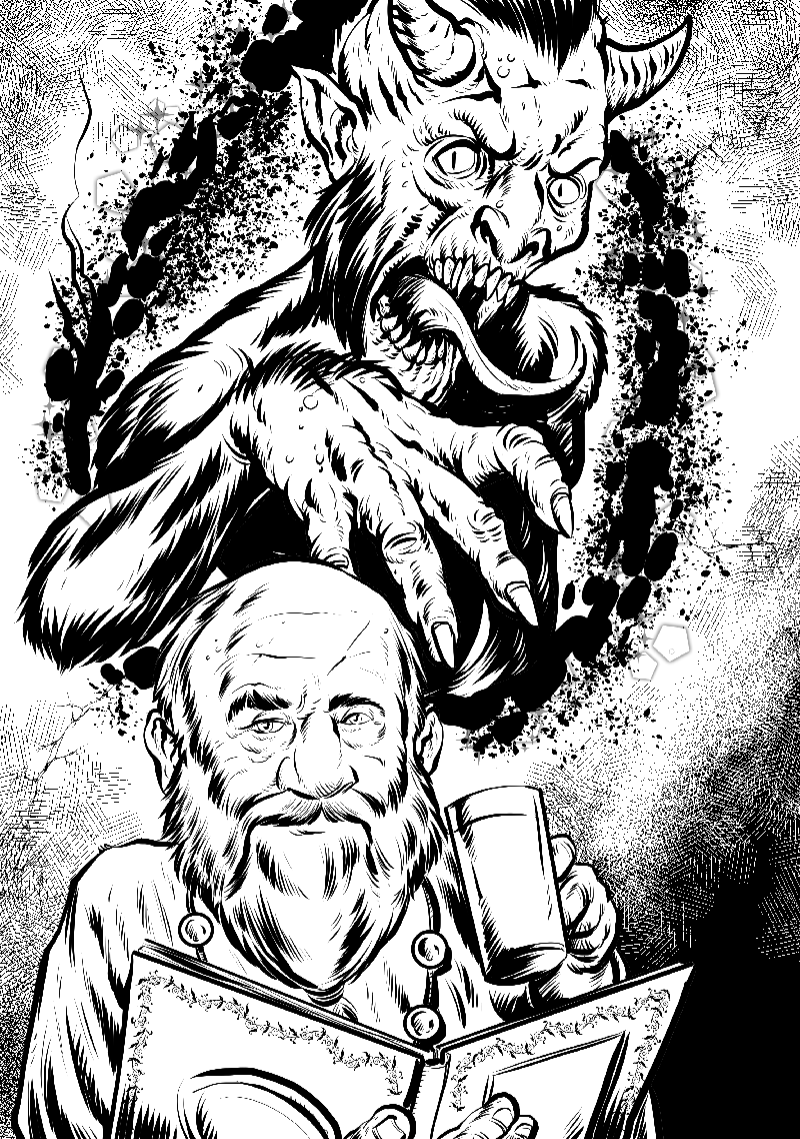
What most seem to agree with is that more egregious forms of necromancy are forbidden magic, but that doesn’t stop some from plumbing its depths. Many who stray into the necromancy are usually convinced by arguments presented in the Snare of Souls and similar works that such magic is just a natural part of the Multiverse, and to deny it is mere superstition. They can be persuasive arguments, especially for those seeking power, but often lead to extreme ends and the nihilism of undeath.
So, who is right when it comes to necromancy? Answers like that in the Delve RPG aren’t as simple as they are in other fantasy RPGs. While the prevailing culture treats it as anathema, other cultures and individuals do not. In the end, it’s all about what truths you want to coexist in your stories to instill mystery, difficult choices, and doubt.

This Saturday, features on the Delve RPG Patreon for Delvers, you’ll find the Hazelnut & Twig Quest Site, featuring the Maxim Society, necromancy secrets, and the possibility for further hauntings.
Next up, we will look at the force and forces of chaos in the Delve RPG.
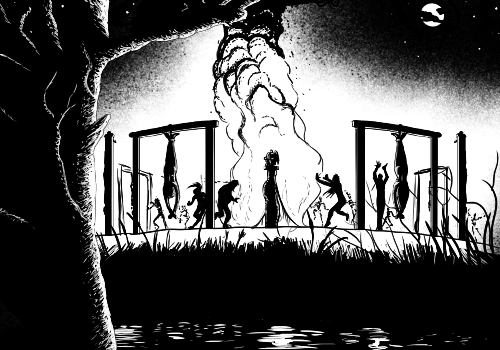
Art by Eric Lofgren
Delve RPG does not use generative AI words or images and respects the intellectual property rights of actually intelligent creators.

Leave a Reply