
Not long ago, Wizards of the Coast laid off around 90% of the staff of their highly praised and vaunted Project Sigil. But what is truly remarkable is how they managed to get so close. Project Sigil wasn’t just a self-imposed benchmark of a successful 5e run; it’s been an intermittent obsession of WotC since before the turn of the century.
While TSR produced some digital tools for the game, when WotC took over and announced the release of 3rd Edition, they were bullish on digital tools for the new edition. The 3e Player’s Handbook came with a (buggy) CD featuring a character-building tool. There were also plans to create a video-game-like program that would allow DMs to plan out and even play out encounters they had created before launching them to their players. These plans and any future digital tools were scrapped when Hasbro sold its entire digital rights to the company, then known as Atari.

This led to numerous drastic changes at Wizards of the Coast. I wasn’t even working there for six months when Peter Adkinson resigned. Massive layoffs and reorganizations then ripped through the company, and my entire section was nearly outsourced to a third-party company. Anything even remotely resembling a digital tool for playing the game (including tracking play through the RPGA) was put under intense scrutiny to ensure we were not violating the contract with Atari. However, for a considerable number of years, few, if any, digital initiatives came knocking on WotC’s door.
What I saw of those early digital tools was not quite what was needed. The character generator was challenging to update and had bugs. And I don’t believe that encounter tester was ever out of the “gee, wouldn’t it be cool” phase of development. Wizards in the days before I started and for a short time after was a heady place. A place where there were no problems, only solutions. With Peter’s departure, along with near-annual layoffs, restructurings, and lackluster management, Hasbro managed to beat that out of WotC, at least for a while.
The issue was, while WotC was out of the digital race, others were not. Fledgling programmers and small but professional groups were creating tools of various types, including virtual tabletops. I was an early adopter of such technologies, always more than willing to take a look at what folks were cooking up. I especially enjoyed using Fantasy Grounds, where I was able to merge my local game group with my college game group to run Paizo’s Age of Worms adventure path.
It was, and still is, a solid tool. Did it sometimes take me longer than I would like to upload the various bits and pieces from adventures into its interface? Yes, but not that much longer than my prep time for a physical game. Clicking a program off is so much easier than an in-person post-game cleanup. I was a fan.
This, of course, changed around the time I started working on D&D 4e. The relationship between Hasbro and Atari was on a downward trajectory, and Wizards started pursuing digital games and tools again. Due to my interest and knowledge of technology, I was designated as the primary point of contact between the digital team and D&D rules R&D.
It was a fascinating period. Folks in tech were excited about the various technologies coming online. They wanted to create a character builder and visualizer that would integrate seamlessly into a virtual tabletop and potentially into a 3D printing service for in-person games.
One of my many frustrations with being a go-between was that the tech was full of ideas but lacked tangible results. The character visualizer was janky, and the characters it created lacked, let’s say, aesthetic appeal. While there were many new and powerful tools for creating these tools, there was little incentive or desire to learn those tools or hire folks skilled with them. At one point, when discussing the 4e VTT, which had only the simplest mock-ups as inspiration, I suggested that we might consider either licensing or collaborating with Fantasy Grounds or other VTTs that were emerging on the scene. You would have thought I stabbed someone’s child.
“That program’s a piece of shit,” someone said.
“Did you ever use it?” I asked.
“I don’t need to. It just is.”
Oooph. I want to say that I have never had a conversation that frustrating again, but I have had it multiple times while working for or consulting with various companies, and it often involved VTTs. There is a peculiar notion in the TTRPG game industry that VTTs are somehow easy to use. I mean, they’re not a full-fledged video game; they’re just a tool that allows people to play this game remotely. How hard can that be? It turns out pretty damn difficult, especially if you think it is going to be easy. This is often exasperated by the lovable arrogance of programmers who think that anyone’s code by theirs is a steam pile of dog crap.
Technical issues and daydreams aside, they were also hamstrung by not precisely knowing the particulars of the game they were designing for. Last-minute changes and addenda were injected into the rules at a record pace as the D&D team sped toward their publishing deadlines,
In a twist that would echo more than a decade later, the project was eventually stymied by a lack of communication with the rules team, and the plans of another tech team with an eye for expansion and the higher budgets that could yield. R&D were often not inclined to share drafts or talk about changes being considered, and had become so cagey about the project, last minute decisions were often made in private by a special “strike-force” or made ad-hoc during a final review by a manager who felt empowered to do so without any discussion with the designers and developers. And while R&D was provided with tools to aid transparency in something that the C-Suite, marketing, sales, and tech desperately wanted, those tools were quickly discarded because they didn’t fit into the team’s normal processes. Eventually, the entire thing was eaten up by Gleemax and became even more chaotic before collapsing.
Eventually, Fantasy Grounds and other independent VTTs started providing licensed material, allowing users to import rules and adventures into those interfaces.
I had similar experiences working at Paizo. It’s almost as if there’s some secret technology playbook I’m not privy to. Spoiler alert—if that playbook exists, it sucks.
By all accounts, WotC is still using that playbook. Everything that has come out about Sigil and its eventual demise echoes my experiences in the 4e/Gleemax years. A dream that soon becomes a desire for monetization is soon hindered by competing goals or passive-aggressive behavior in other parts of the company. And while this time, it seems like WotC did hire a bunch of people who knew what they were doing, it’s likely that managers who didn’t got in their way.
One of my fondest (read: not) memories was presenting the current build for a game app, when I was interrupted by a particular boss who lives to interrupt, who didn’t care about the terminology both I and the developers were using, insisting on we change standard software terminology because it didn’t feel like the right words were being used to them.
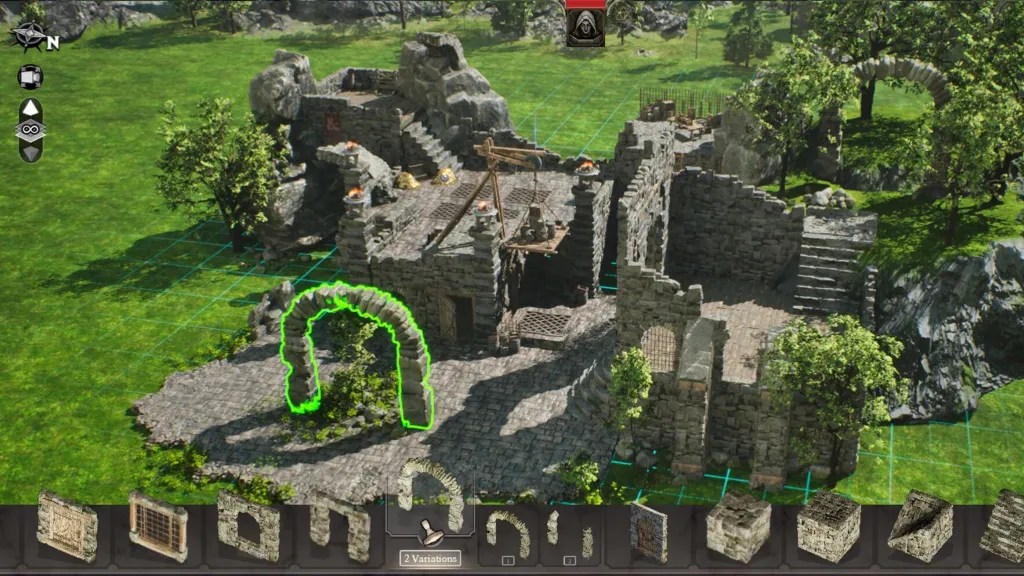
And this is why I’m surprised that Sigil got as close as it did. The thing was crazy ambitious. Its goal was to create a virtual space for miniatures and play areas that did all of what the best VTTs do on a good day, with the high-end graphics of a video game. Why do you need those high-end graphics to play D&D? “You don’t but shut the fuck up” seemed to be the answer. “You’ll love it, until we don’t” was its ultimate strategy.
In many ways, the issue of creating and implementing digital tools within any company reflects the challenges in the tech marketplace today. There is a belief that tech works best when it makes a big splash; when it gives consumers something that they didn’t even know that they wanted or needed. We experienced several years of this sort of advancement, or at least it seemed that way. The Web2 revolution and its methods of creating massive and global consumerism, the iPod, iPhone, and iPad, and smart fucking everything. All those things provided real value to its customers and made its innovators and investors nearly instantly and insanely wealthy. Hell, that was the story of WotC and paper. After experimenting with modestly selling and highly litigated (or rather pseudo-litigated) roleplaying supplements, it created Magic: The Gathering, a game that no one knew they wanted, but everyone bought and played.
Today, we are inundated with the promise of AI in nearly every program or platform available. It’ll transform our lives, they say. But never say exactly how, and just how it is transforming our lives seems like the makings of a big brother tech dystopia. Hell, that Cox fella, along with every CEO on the stock exchange can’t shut up about these hallucinating, IP stealing, often wrong and biased turd burgers that are contributing to the misery of our modern malaise.
The current state of technology is something akin to a rigged lottery. Companies don’t create with the consumer in mind; they create for a consumer they believe they can groom. This soviet-style, 5-year-plan-loving, pissing on your back innovation doesn’t ask what the market wants; they ask, “How can the market serve our goals?”

Death by the usual thousand cuts aside, Sigil was always predicated on the idea that WotC would eliminate the OGL, make it harder for the existing virtual tabletops to compete (even after being excellent partners), funnel their massive (and likely inflated) numbers into a subscription model, and live fat off the stupid nerds forever (Muhaha!).
Then, they shoot themselves in the foot in many ways, including releasing D&D Beyond Maps, which is more of what most people want from a VTT anyway, without the need for the most rad new computer components.
It’s almost as if they don’t realize that D&D players want tools for storytelling and role-playing. Who plays these games? Primarily young and perpetual dreamers with a penchant for stories and game systems they can’t tinker with. Most are not the audience for force-fed computer game graphics, which demand the most optimal computer systems to play a game that only really requires a handful of math rocks and language.
So, even when they ramp up their capabilities to create something like Sigil, they have no clue or care about what TTRPG players want.
That’s why it failed, and that’s why people lost their jobs.


Leave a Reply